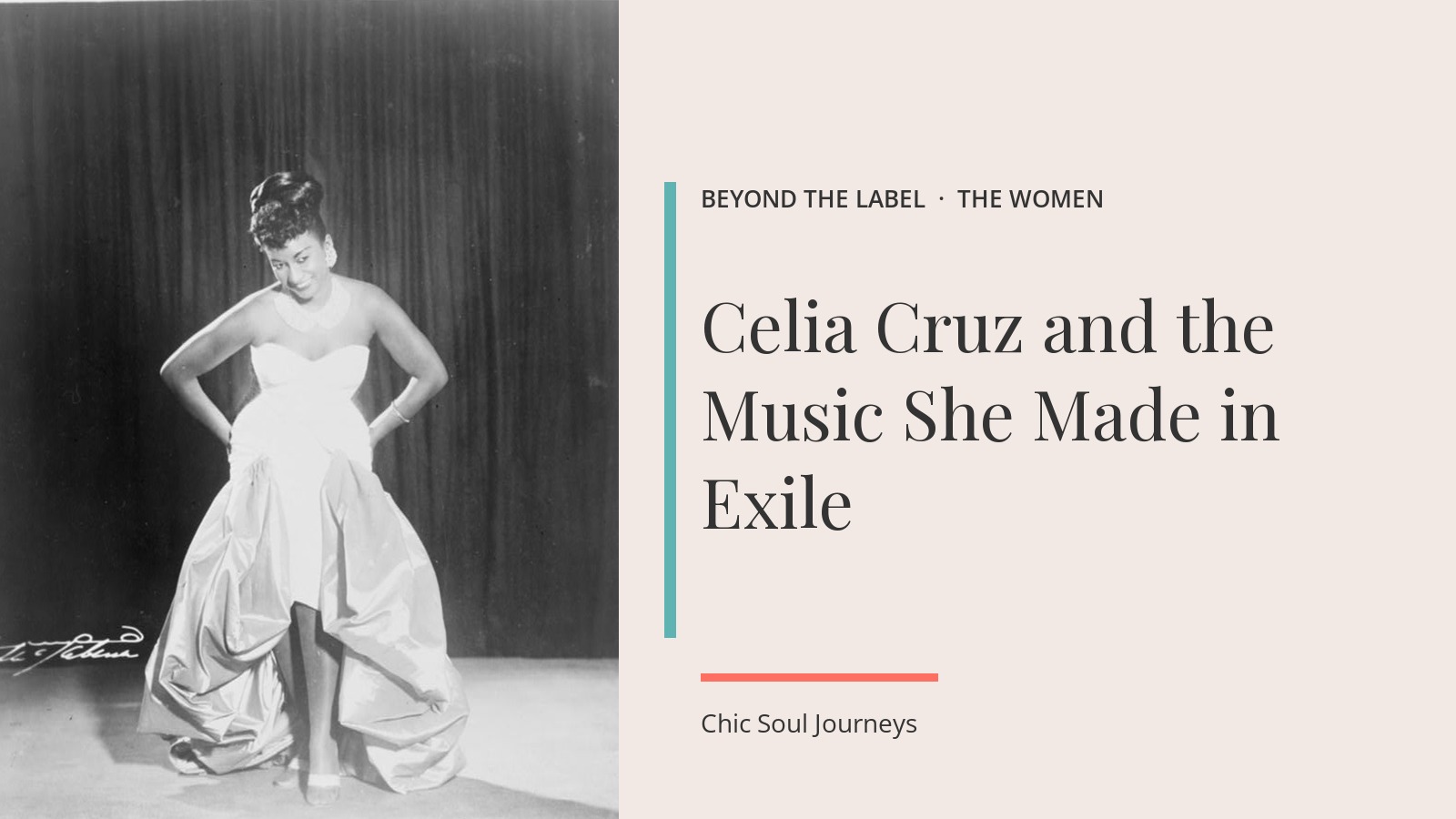
The Smithsonian holds a pair of gold platform shoes. The record attached to them says: “Cruz earned her first pair of shoes by singing to a tourist who bought them for her.”
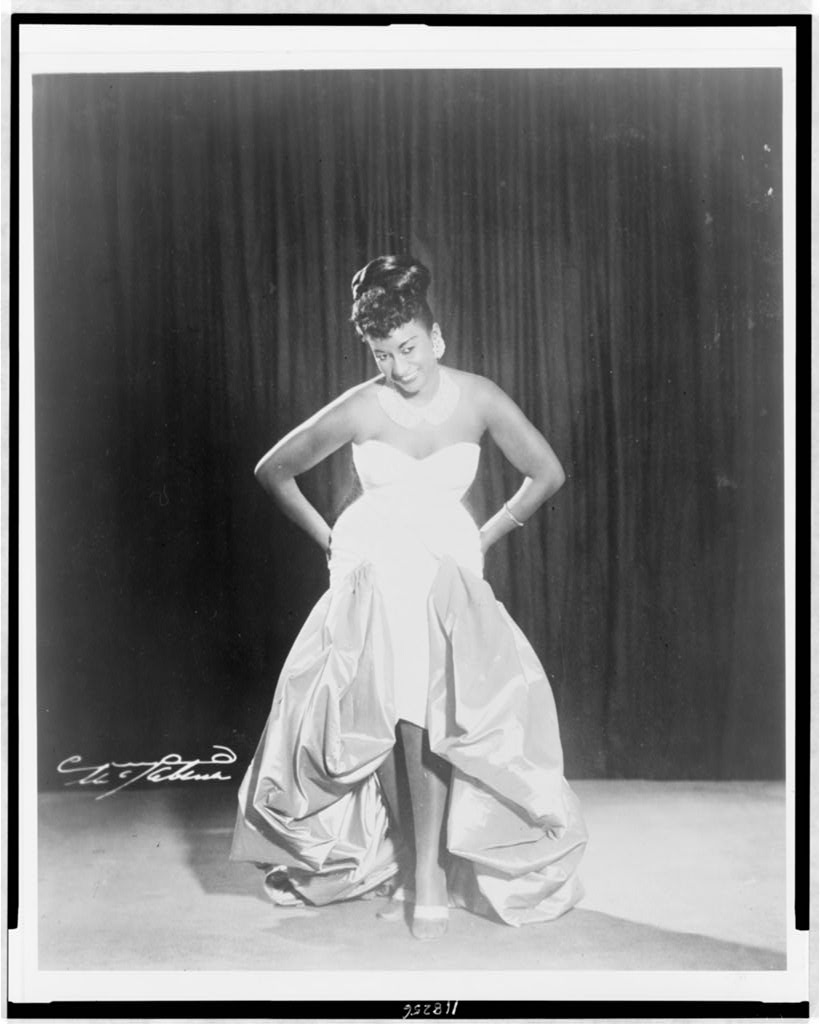
Born in Havana
The Recording Academy gives her full name as Úrsula Hilaria Celia de la Caridad Cruz Alfonso, born October 21, 1925, in Havana, Cuba. The year is disputed. OnCubaNews, reporting in December 2015, writes that some say she was born on October 21, 1924, others say four years earlier, which would be 1920, and some say 1925.
In 1950, according to NPR Music, Cruz was 25 years old when she caught the attention of La Sonora Matancera, then Cuba’s most popular orchestra. NPR Music notes she “became the orchestra’s first black front woman.”
Leaving Cuba, and what followed
NPR Music writes that Cruz “went on tour with La Sonora Matancera in Mexico and unwittingly left Cuba for good.” NPR, in a 2005 piece, reports the shape of the decision: “Cruz left Cuba in 1960, believing she would return. Then she decided to settle in the United States.”
NPR reports: “Two years later, her mother died, and the Castro government would not allow her to return for the funeral.” The National Women’s History Museum records that the Cuban government denied Cruz’s subsequent requests to return. NPR Music adds the reason it reports: officials denied her entrance “for being a popular artist vocally opposed to the Cuban Revolution.” The National Women’s History Museum quotes this line of hers, which it cites to her 2004 memoir: “How could I not say anything when I had the freedom to do so?”
The career Celia Cruz built in exile
NPR Music notes that Cruz released Cuba Y Puerto Rico Son with Tito Puente in 1966, and that Son Con Guaguancó that same year was the first album to promote her as a solo artist on Tico Records. The Recording Academy notes that Cruz reached international fame in 1974 with Celia Y Johnny, a collaboration with Cuban composer and bandleader Johnny Pacheco that produced “Quimbara.”
The awards arrived in stages. At the 32nd Annual Grammy Awards, Cruz and Ray Barretto won Best Tropical Latin Performance for Ritmo En El Corazon, per the Recording Academy. The Recording Academy’s own count gives her 3 wins and 14 nominations. The Latin Recording Academy records 4 wins. The Recording Academy notes she was posthumously presented with a Lifetime Achievement Award in 2016.
In 1994, the National Endowment for the Arts named her a National Medal of Arts recipient.
The National Women’s History Museum describes her as “instrumental to the creation and popularization of ‘salsa,’ a new genre of pan-Hispanic music that emerged in the 1960s.”
Guantanamo, and a glass box of soil
The National Women’s History Museum records that the closest Cruz came to Cuba after 1960 was in 1990, when she performed at the U.S. naval base in Guantanamo Bay.
BBC Mundo, in a piece published by La Nación in October 2024, reports what she said there. Original: “Dijo ‘he besado esta tierra en nombre de todos los cubanos que están en el exilio.’” Translation (mine): She said, “I have kissed this land on behalf of all Cubans in exile.”
The same report, via La Nación, adds: Cruz kept the soil in a glass box, and when she died of cancer in 2003, her manager and husband fulfilled her last wish and placed it inside her coffin. (Original: “Celia guardó la tierra en una caja de cristal y, cuando en 2003 murió de cáncer, su mánager y su marido cumplieron su último deseo y colocaron dentro de su ataúd este pequeño pedacito del suelo de Cuba.” Translation mine.)
The Smithsonian, the shoes, and a coin
In 1997, at a ceremony honoring her 50-year musical career, Cruz donated her stage costume, shoes and all, to the Smithsonian, as the Smithsonian’s own record states. That record identifies her as “Afro-Cuban vocalist Celia Cruz, known internationally as the ‘Queen of Salsa.’”
A Smithsonian coin record for a U.S. Mint quarter with her name shows that the reverse reads: “UNITED STATES OF AMERICA / ¡AZÚCAR! / E PLURIBUS UNUM / 25¢ / CELIA CRUZ.”
The Recording Academy records her death on July 16, 2003, in Fort Lee, New Jersey.
Which part of her story stays with you? Leave a comment, or tell me what you’d add as the piece that belongs here. I’d genuinely love to know.
Leave a Reply
You must be logged in to post a comment.