I am part American Indian, from Zuni and other tribes that are mixed and unnamed, as are many people who are today known as Mexicans. “Mexican” is the name many of us are known by. And October 12 has three names.
Each name comes from a different place and a different moment.
Three Official Names for October 12
Columbus Day is the name in U.S. federal law. The statute that lists federal holidays names it: “Columbus Day, the second Monday in October.” The Office of Personnel Management’s 2026 holiday calendar shows “Monday, October 12, Columbus Day.”
That federal name has a layered history. In 1892, President Harrison proclaimed October 21 of that year a one-time national holiday marking the 400th anniversary of Columbus’s voyage. In September 1934, President Roosevelt issued an annual proclamation, designating October 12 of each year Columbus Day. Congress added Columbus Day, the second Monday in October, to the federal holiday list when it enacted Public Law 90-363 in June 1968, effective January 1, 1971. The statute still carries the Columbus Day name.
Indigenous Peoples’ Day has a different origin. The idea came from a September 1977 conference in Geneva, where representatives of Indigenous nations and peoples from around the world gathered at the Palais des Nations. The conference’s resolution proposed October 12 as a day of solidarity with Indigenous peoples of the Americas. In 2021, President Biden proclaimed October 11 Indigenous Peoples’ Day, which CNN reports made him the first president to formally acknowledge it. The 2025 White House proclamation (Proclamation 10980) is titled for Columbus Day. As of 2025, 17 states and Washington D.C. hold a holiday honoring Native Americans on the second Monday in October, per Pew Research.
Mexico uses a third name. In December 2020, Mexico’s Congress passed a decree naming October 12 the Día de la Nación Pluricultural, the Day of the Pluricultural Nation. The Secretaría de Gobernación published the decree on 18 December 2020.
Three names.
How Colonial Law Sorted People
Spanish colonial law sorted people into legal categories. One of those categories was “indios.” Scholars at UC Santa Barbara describe these as legal categories in the colonial system, alongside designations for people of African descent and those of mixed ancestry.
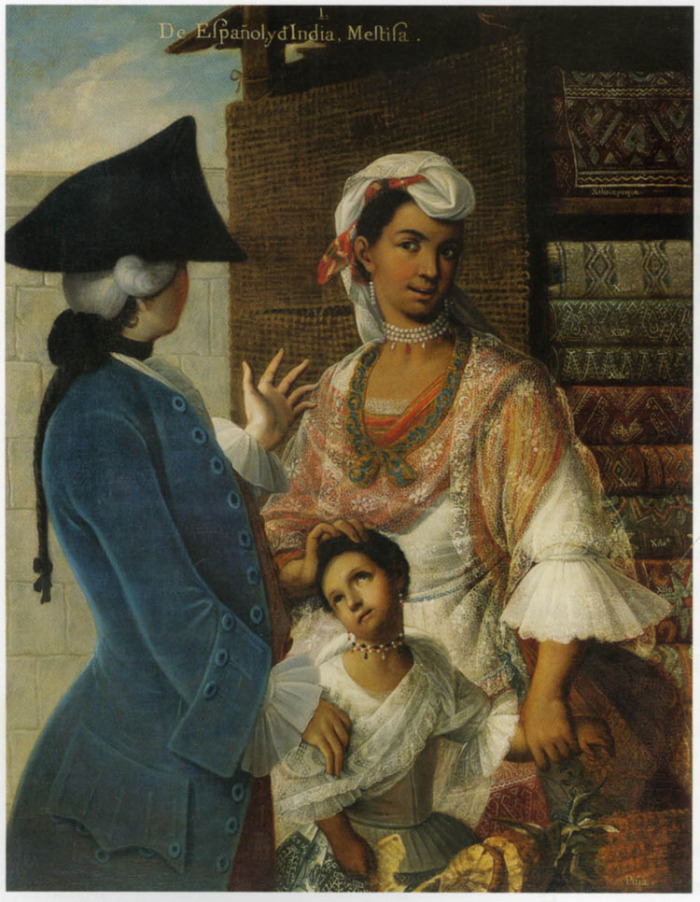
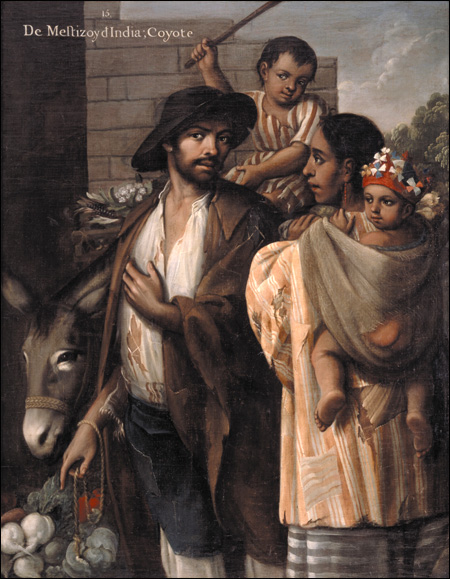
The casta system turned those categories into a whole genre of painting. Miguel Cabrera painted a series of them in 1763. One is labeled “De español e india, nace mestiza”: from a Spanish man and an Indigenous woman, a mestiza is born. The label names a category.
Baptism registers also recorded names. In California missions, studied by the National Park Service, missionaries entered a Spanish name and age for each baptized person. The same registers typically also noted the name of the ranchería, the community, of any Indigenous person baptized. That specific evidence is from California missions. What happened in other regions varied by time, place, and administrator.
In colonial New Mexico, baptismal records tell another story. A 2007 New Mexico legislative memorial documents that baptismal records show at least 4,601 captive Indigenous people, a group known as genízaros, were baptized in New Mexico between 1700 and 1880, becoming part of Spanish, Mexican, and territorial households. By 1776, genízaros made up at least a third of the province’s population (per the same legislative memorial). The memorial adds that many New Mexicans can trace their ancestry to these peoples.
The historian Sarah Cline at UC Santa Barbara writes that when Mexico gained independence, “the legal racial hierarchy of the colonial era was repudiated and casta paintings ceased to be produced.” One scholarly article, studying demographic records in Guanajuato, attributes the abolition of casta notation in official and religious documents to 17 September 1822. The afterlife of those labels in later records is not documented here.
Mestizaje and the National Story
The historian David A. Brading, writing in the UNAM journal Revista Mexicana de Sociología, traces how thinkers including Molina Enríquez and Vasconcelos held that mestizaje was “la fuente histórica de la nacionalidad mexicana,” the historical source of Mexican nationality (translation mine). Brading describes the official project of the indigenista Manuel Gamio: its main object, he writes, was “eliminar los obstáculos para que el mestizaje, proceso iniciado siglos atrás, tarde o temprano produjera una nación mexicana homogénea,” to remove the obstacles so that mestizaje, a process begun centuries earlier, would sooner or later produce a homogeneous Mexican nation (translation mine).
That is what the project aimed for.
In Mexico, 23.2 million people identify as Indigenous, about 19.4% of the relevant age group, per Mexico’s 2020 INEGI census. These 23.2 million identify as Indigenous whether or not they speak an Indigenous language, per INEGI’s self-identification count. Of those 23.2 million, 7.1 million speak an Indigenous language and 16.1 million, which is 69.2%, do not, per the same INEGI 2020 census.
Zuni History and Changing National Records
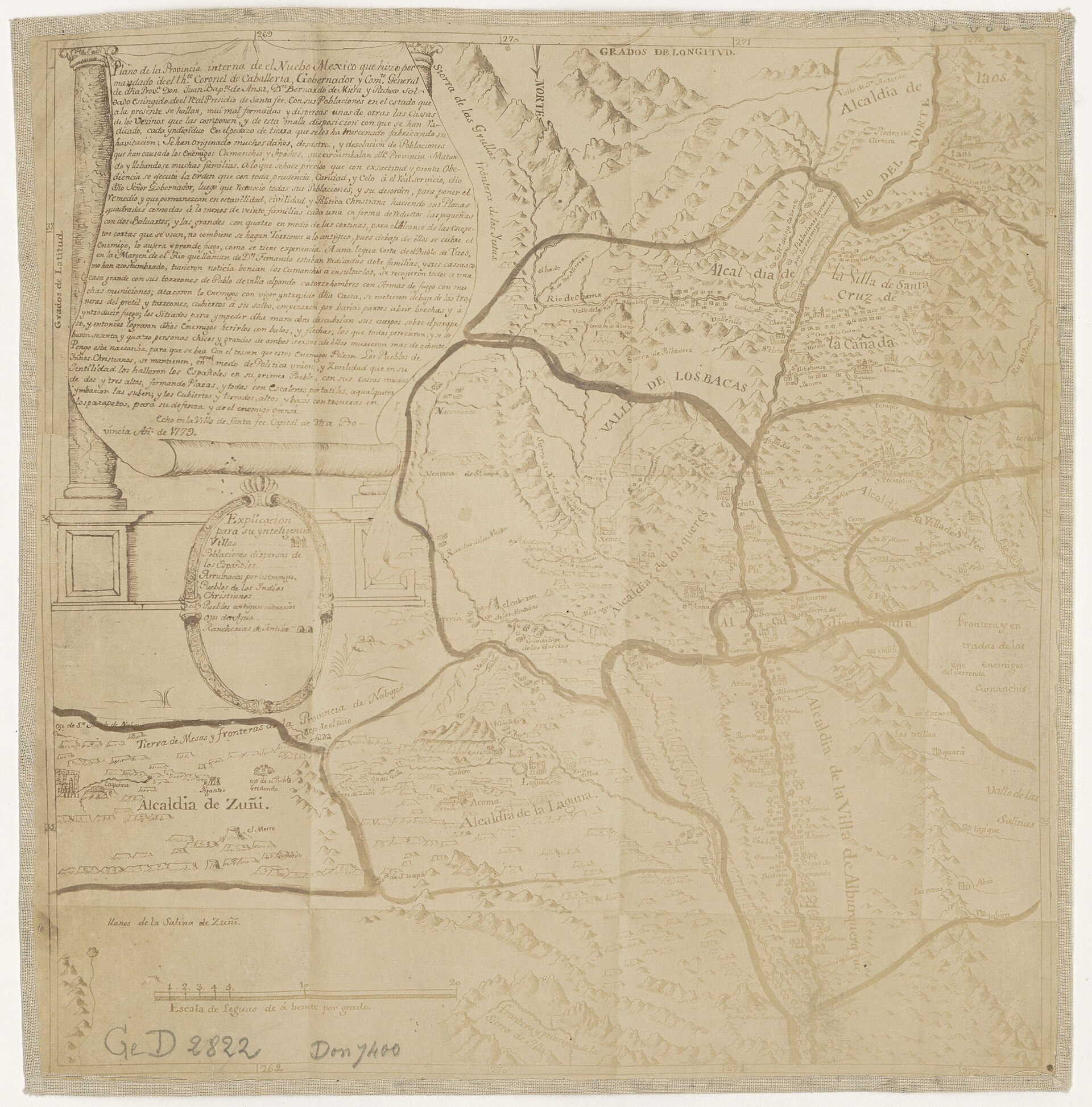
Zuni history is one example of how national records changed. The National Park Service writes that in 1539 Esteban first glimpsed Hawikuh and likely visited, and that the pueblo was conquered by the Coronado expedition in 1540. The tribe’s own history page records that in 1680, Pueblos in New Mexico including Zuni planned and carried out a coordinated revolt against Spanish domination, that the Pueblo became part of the Republic of Mexico in 1821, and became a United States Territory in 1848. One community, two national records in less than three decades.
The Names We Cannot Trace
I hold this day differently when I think about the part of my ancestry that is American Indian, from Zuni and other tribes that are mixed and unnamed, as are many people who are today known as Mexicans.
I speak for myself and do not speak for the Zuni people or any tribal government.
What I carry is a question: what is the Indigenous part of my story called? October 12 is a date with three names, and that question belongs beside them.
Which part of this lands closest to where you are?
Comment below and tell me what this day means to you, if Mexican indigenous heritage is part of your story, even the unnamed part. Or tell me what you would add as something I missed entirely. I would genuinely love to know.
Sources
- Federal law names today Columbus Day
- OPM 2026 list confirms Columbus Day
- Harrison 1892 one-time national holiday proclamation
- Roosevelt 1934 annual Columbus Day proclamation
- Biden 2021 Indigenous Peoples’ Day proclamation
- Biden first president to formally acknowledge it (CNN)
- 2025 proclamation returned to Columbus Day
- 17 states + DC honor Native Americans on this date, per Pew 2025
- 1977 Geneva conference
- Conference resolution proposing October 12
- Mexico’s 2020 Día de la Nación Pluricultural decree
- Spanish colonial legal categories including indios
- California missions baptism records, Spanish names and ranchería notation
- Genizaro baptism records, New Mexico 1700-1880, at least 4,601 (NM legislative memorial, caveat: not a scholarly study)
- Casta notation abolished in official and religious documents, 17 September 1822 (attributed in a scholarly article on Guanajuato demographic records)
- Mestizaje as historical source of Mexican nationality; official project aimed at homogeneous nation (Brading, Revista Mexicana de Sociología, UNAM)
- INEGI 2020: 23.2 million identify as Indigenous in Mexico, 19.4%
- Zuni Pueblo: part of Mexico 1821, US territory 1848, 1680 Pueblo revolt
- Zuni: Esteban 1539 and Coronado 1540 conquest (NPS Hawikuh)
Leave a Reply
You must be logged in to post a comment.